
Emily Sumner
Jake did a brilliant job. Couldn’t fault his work. Hard working and absolutely charming.

In-screed systems designed alongside your architect, builder and heat pump
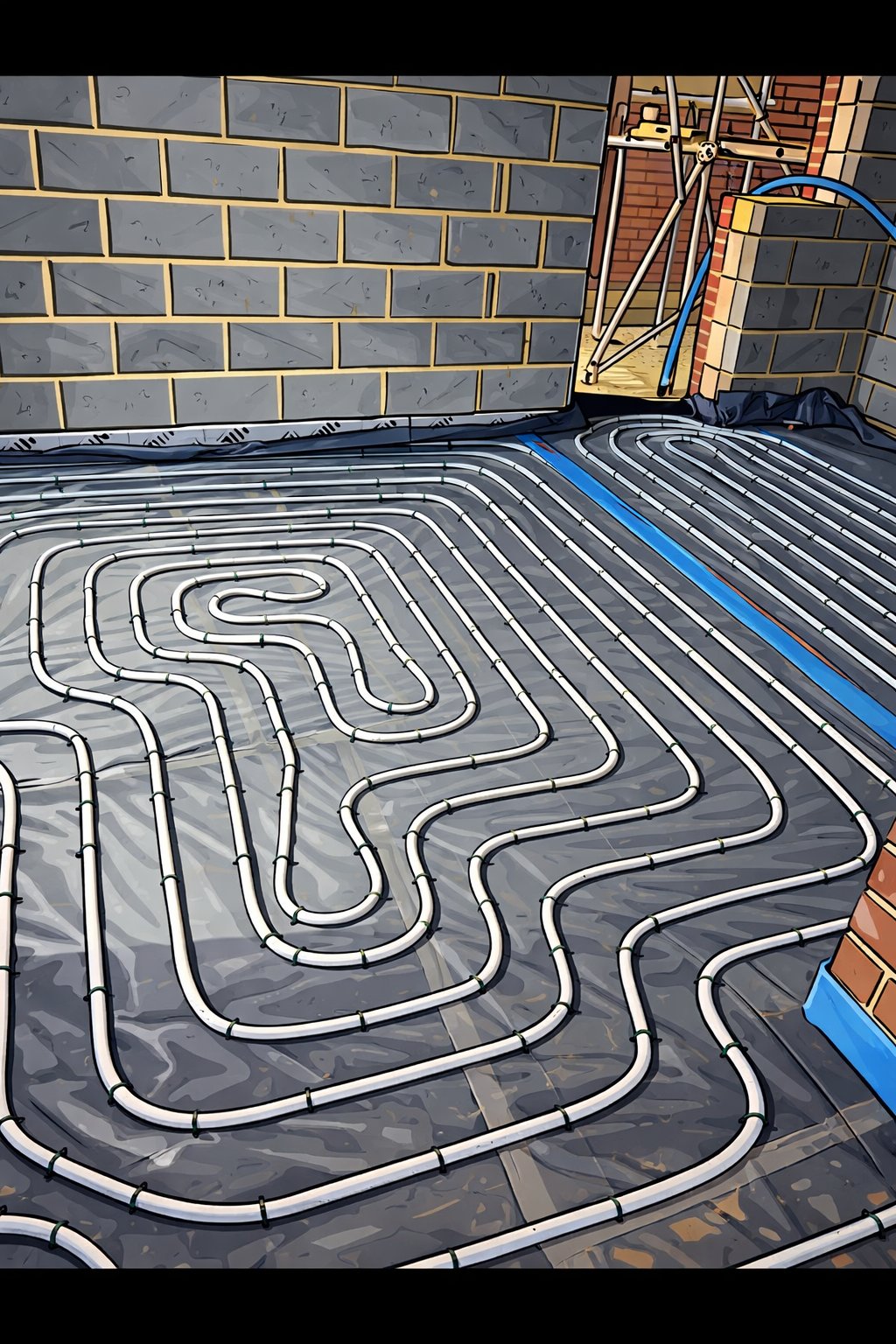
A new build or extension is the perfect place for in-screed underfloor heating. With the sub-base and PIR insulation already in the specification, the pipe simply clips to the insulation and a screed layer is poured over the top. The screed becomes a large thermal mass that stays warm long after the heat source is running, and the floor output is as even as it gets.
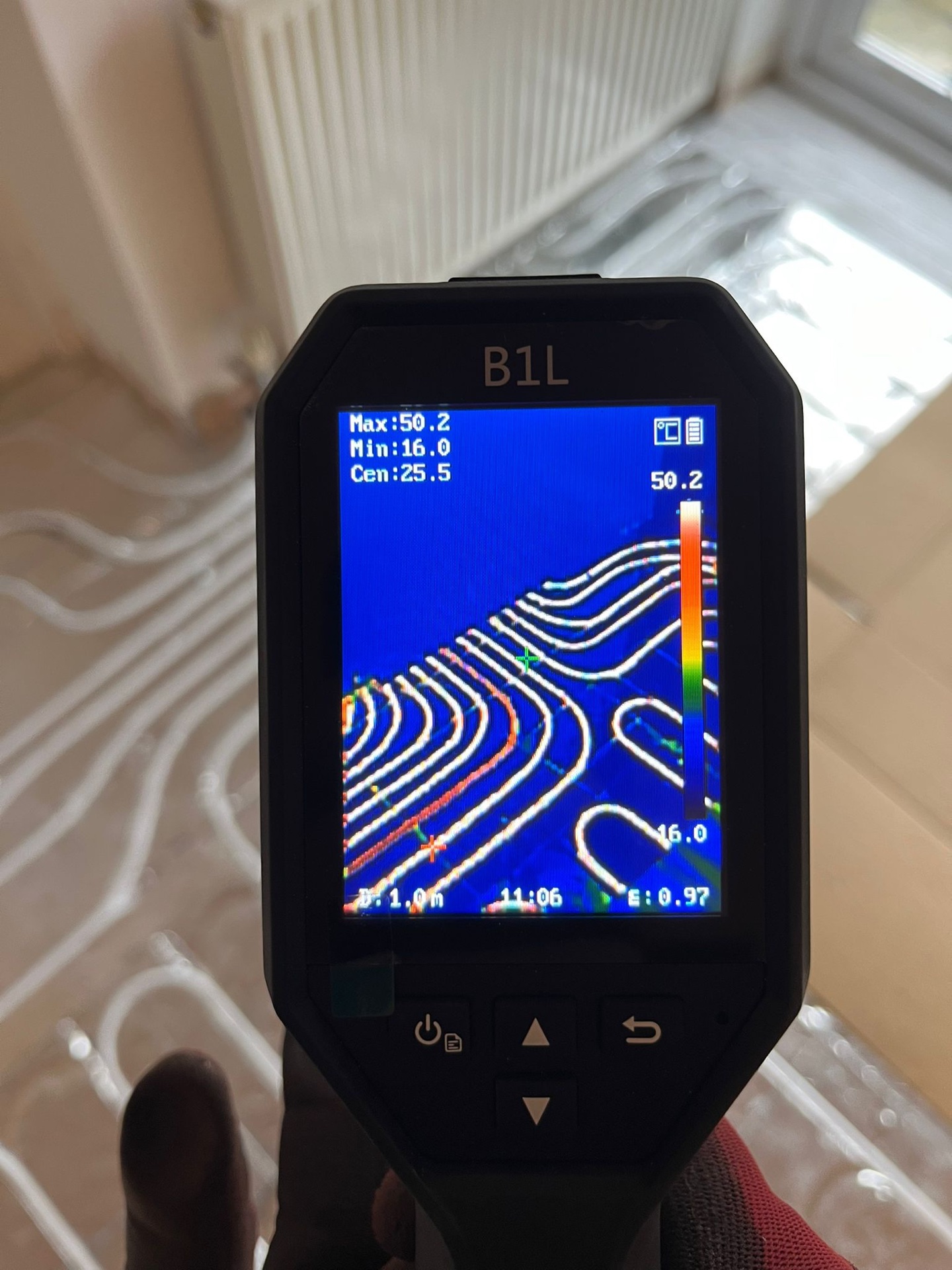
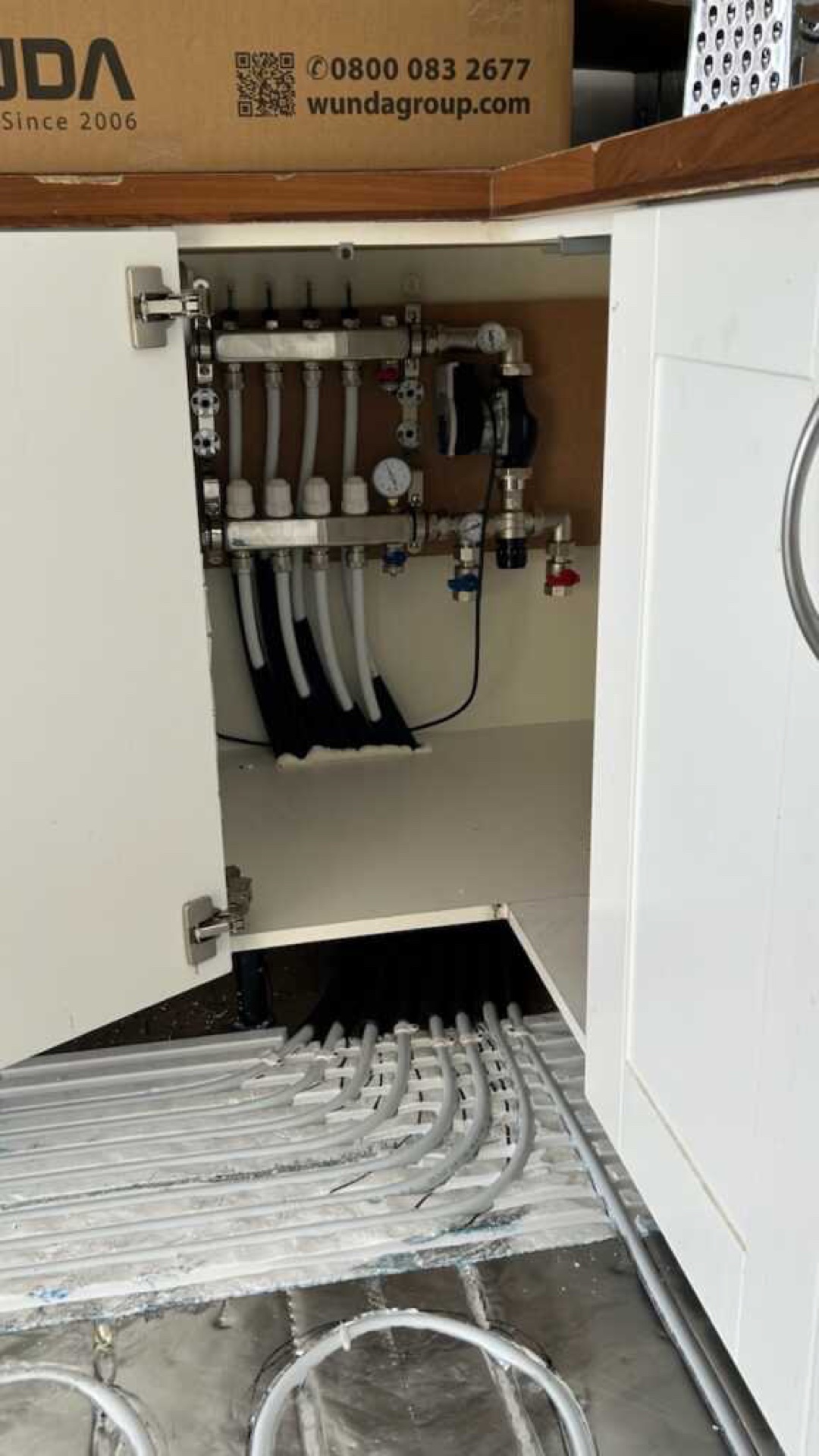
We work to your architect's drawings and your screeder's schedule. Typical installs use 100mm of PIR insulation over the DPM, perimeter edge insulation around every wall, then 16mm PE-RT pipe clipped on top at 150mm or 200mm centres depending on the heat loss. The manifold is sized to the zone layout, the flow rate is set properly, and everything is leak-tested before the screeder pours.
Our price guide for the underfloor heating is labour only and covers laying the pipework, connecting to the manifold and testing. As a rough guide that is £8–£12 per square metre for large open areas, £10–£15 for an average domestic job, and £15–£25 for small areas or more complex layouts. Screed curing times vary, so we give you a commissioning schedule so the first heat-up happens at the right moment. The system will outlast the boiler or heat pump driving it, and the pipe carries a 50-year manufacturer warranty.
We're set up to work alongside heat pump installers, builders and screeders, and we're happy to be on site for the critical handovers. Free quotes on drawings, honest pricing, and a proper commissioning plan at the end.
Emily Sumner
Jake did a brilliant job. Couldn’t fault his work. Hard working and absolutely charming.
Dando
So reliable, hard working, trust worthy, polite and professional. An amazing job completed, and can not praise Jake enough. Highly recommend him for his work. Thankyou!
James
Jake expertly planned and managed installation of our Wunda underfloor heating system. A real UFH specialist who was dependable and reliable. He was practical, creative and solution orientated to ensure our flooring was installed in great time. Excellent work and would highly recommend.
金龍魚
Jake is very kind and helpful when I contacted him for our underfloor heating problem.
Penelope Tait
I recently used Jake, and I couldn't be more impressed with the quality of work and overall experience. He was punctual, polite, and incredibly knowledgeable, he even made some money saving suggestions which was great and there were no hidden costs.The work was completed on time and to an exceptionally high standard. He left the work area clean and tidy each day, which I really appreciated.I wouldn’t hesitate to hire Jake again and have already recommended him to friends and family. If you're looking for someone reliable, talented, and genuinely dedicated to doing a great job, look no further.Five stars all the way!
We cover Kent end to end, with regular work through Sevenoaks, Bromley, Royal Tunbridge Wells, Tonbridge, Maidstone, Dartford, Gravesend and Orpington. If you're near the border and not sure, give us a call on 07452 995369 and we'll tell you straight whether we can help or point you somewhere we trust.
Kent Underfloor Heating is owner-run by Jake, who trained on established installation sites straight out of sixth form before going out on his own. Every job here gets his attention from survey through to handover, so you're dealing with the person fitting the floor, not a sales rep.
Yes, always. We come out, survey the job, and write a clear fixed-price quote with no obligation to go ahead. Quotes are valid for 60 days so you've got time to plan the rest of the works around it.
We carry £1,000,000 of public liability insurance and provide evidence on request. Every install is pressure-tested, documented, and handed over with a commissioning note, so there's a proper paper trail if you ever need it for a sale or a warranty claim.
Yes, frequently. UFH sits in the middle of several other trades, so we're used to co-ordinating with builders, screeders, heat pump installers and plumbers to keep the programme moving. We'll be on site for the handovers that matter.
Bank transfer, card, and cash. A materials-cost deposit secures the booking, and the final payment is due on completion unless we've agreed staged payments for a larger job in writing.
Yes. Low-profile overlay systems add as little as 16mm to the finished floor height and don't need the existing floor to be removed, so they work well over old concrete slabs and timber floorboards. Good retrofit options exist for most domestic rooms.
Typically 16mm with pre-grooved overlay boards. The finish layer on top (tile backer, smoothing compound or screed) adds a few millimetres more, but the total build-up stays well below what a traditional in-screed system needs.
Minimal. We lift the existing floor covering if there is one, lay the overlay boards, clip the pipe to the designed layout, connect the manifold, pressure-test the loop, and leave the floor ready for your chosen finish. Most domestic retrofits complete inside a few days.
Tile, LVT, vinyl, engineered wood, laminate and most carpets all sit happily over a correctly-prepared overlay system. Thick solid wood and deep-pile underlay dampen the output, so we'll talk through what you're planning before we specify the board build-up.
Yes. UFH runs at much lower flow temperatures than a radiator system, so it pairs well with modern condensing boilers and air source heat pumps, and it helps keep running costs down once the controls are set up properly.
Subfloor prep and coverage for a retrofit overlay is typically £25–£45 per square metre, with the pipe and manifold install priced separately once we've seen the job. Every quote is fixed-price and valid for 60 days, no obligation.
It's the gold standard. With the sub-base and PIR insulation already in the build-up, pipes clip directly to the insulation and a screed is poured over the top. You get even heat across the whole floor, excellent thermal retention, and a system that'll outlast the boiler or heat pump driving it.
Typically 65–75mm of sand and cement screed, or 30–50mm of flow screed, depending on the specification. Your screeder or architect will usually set this; if they haven't we're happy to advise based on the loads and the heat output you need.
Sand and cement screed generally needs 7 to 28 days to cure before you can commission the heating, depending on mix design and drying conditions. We'll give you a written commissioning schedule so the first heat-up happens at the right moment and the screed doesn't crack.
Yes. Insulation stops heat escaping downwards and is required to meet Part L of the Building Regulations. Typical thickness is 75–100mm PIR, plus perimeter edge insulation on every wall. The right thickness depends on your heat-loss calculations.
We supply and fit the insulation boards where they're part of our scope, lay the damp-proof membrane, fit the perimeter edge insulation, and clip the pipework ready for the screeder. Everything is leak-tested before hand-over so the pour can happen without a hold-up.
It's a near-perfect match. UFH runs best at low flow temperatures and that's exactly where heat pumps hit peak efficiency. We're happy to design the layout and flow rates alongside your heat pump installer so the two systems work together from day one.
A floor built on timber joists with a void underneath, the most common ground and first-floor construction in older British homes. There's no slab under the joists, just insulation (sometimes) and then ceiling beneath. Many Kent properties have them.
Over-joist systems add height to the finished floor. Between-joist installation keeps the floor level exactly where it is, essential when you can't raise it because of doors, stairs, existing skirtings or adjoining rooms that can't change.
We clip the pipes onto a layer of insulation fixed 25mm below the tops of the joists, then fill the space above the pipe with a dry screed flush with the joist tops. The floor finish then sits in direct contact with the dry screed and the heat passes cleanly through.
Yes, the existing boards or chipboard have to come up to fit the system. We put everything back afterwards, or advise if the existing boards are better replaced, and we leave the floor level ready for your chosen finish.
LVT, engineered wood, vinyl, and tile all sit happily over a correctly-built suspended-floor UFH system. Thick solid wood and deep-pile carpet dampen the output, so we'll talk through the finish you're planning before we specify the build-up.
Output is a little lower than a full in-screed system because there's less thermal mass, but response time is much faster, which actually suits how most homes heat day to day. Zoned properly with modern controls it's efficient, quiet and comfortable.
It uses a structural 22mm tongue-and-groove chipboard with pre-routed grooves that the heating pipe sits into, so the floor deck and the underfloor heating are laid in one pass. A 6mm cement board is then mechanically fixed over the top to complete the structural integrity. It suits full refurbishments and new-build suspended floors where the floor is being replaced anyway.
Because it does two jobs at once. Normally you'd pay a carpenter to lay ordinary chipboard flooring, then pay separately for an overlay heating system and the extra materials on top, which also adds at least 16mm of height. The structural chipboard deck carries the heating itself, so there's no separate overlay to buy or build up.
No, and we'll always explain why. We lay the boards and the pipe together so the chipboard never has to be routed on site. Routing the board afterwards to drop pipe in weakens its structural integrity and causes problems down the line. Running the pipe under the deck and popping it up where needed keeps the floor solid.
Either can be used, but we prefer a 6mm cement board because it's better for thermal mass and heat transfer than wood, and it comes printed with markings showing where the pipe runs so nothing gets screwed into a pipe. Once it's mechanically fixed down, the floor feels rock solid.